





















































-
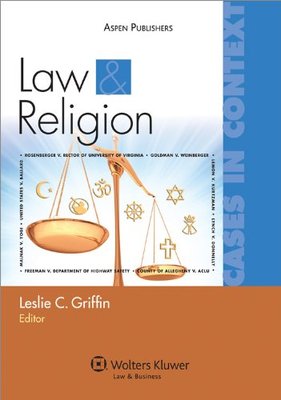
Law and Religion: Cases and Materials
Leslie C. Griffin
The fifth edition was updated to include important new Supreme Court cases on state funding of churches and the religious freedom issues associated with COVID. The fifth edition continues the book's interdisciplinary approach to law and religion, its student-friendly notes and questions, and its inclusion of numerous non-Supreme Court cases from a variety of state, federal, and international courts.
-

Psychology for Lawyers: Understanding the Human Factors in Negotiation, Litigation and Decision Making
Jean R. Sternlight
The primary goal of this book is to expose lawyers and law students to some of the key insights offered by the field of psychology and to illustrate the ways in which understanding these insights can improve the practice of law.
Law is a profession centered on human interaction. Virtually every aspect of the practice of law can be enhanced by a well-grounded understanding of psychology—the science of how people think, feel, and behave. Lawyers who harness the insights of psychology will be more effective interviewers and counselors, engage in more successful negotiations, conduct more efficient and useful discovery, communicate more ably, better identify and avoid ethical problems, and even be more productive and happy.
Psychology for Lawyers, Second Edition introduces lawyers to some of the key insights offered by the field of psychology, drawn from research on perception, memory, judgment, decision making, emotion, persuasion and influence, communication, and the psychology of justice. It then applies these insights tasks to the daily tasks of lawyering, including interviewing, negotiating, counseling, and conducting discovery.
Case studies and examples throughout the text illustrate concepts in an approachable, relatable way. The authors also include recommendations for relevant books, podcasts, and other media for further exploration.
-
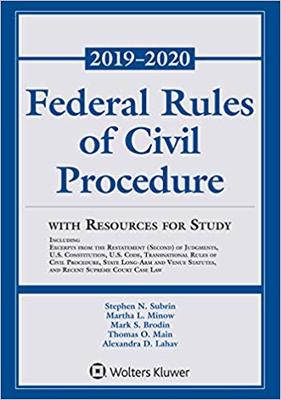
Federal Rules of Civil Procedure with Resources for Study,
Thomas O. Main
An ideal accompaniment to any civil procedure casebook, including the authors’ own Civil Procedure: Doctrine, Practice, and Context, Fifth Edition, the 2019-2020 statutory supplement presents the current Federal Rules of Civil Procedure (FRCP). Useful cross-references to Advisory Committee Notes, Restatement sections, and Transnational Rules have been integrated into the FRCP to help students explore the larger context of each Rule.
Complete features include:• The current Federal Rules of Civil Procedure and proposed amendments
• The U.S. Constitution and U.S. Code provisions current through June 1, 2019
• Excerpts from the Restatement (Second) of Judgments
• Excerpts from the American Law Institute/UNIDROIT Rules of Transnational Civil Procedure
• Examples of state long-arm and venue statutes
-
Legal Writing for Legal Readers: Predictive Writing for First-Year Students
Mary Beth Beazley
Applying the perspective of the reader to the craft of writing, Legal Writing for Legal Readers teaches the differences between strong and weak legal writing by letting students read examples of both. Students discover how productive it can be to read a well-articulated argument, as compared to one that is illogical and ill conceived. We aren’t always able to identify our own faults as writers—but as readers, we can see clearly the merits of both the argument and its presentation. The authors’ sidebars and annotations highlight why one writer fails while another succeeds. Students realize the significance of their own behavior as readers and how that behavior should dictate their writing decisions. As readers, students learn to recognize the specific elements of analysis and structure that make legal writing effective. As writers, they will make better and more informed choices, when they think about it from a reader’s perspective.
New to the Second Edition:
- Revised to focus exclusively on predictive analytical writing that most law schools teach during the first semester of the first year
- Expanded inclusion of annotations and marginal notes that answer anticipated student questions
Professors and students will benefit from:
- Extensive variety of samples and examples, both good and bad, selected to illustrate legal writing concepts for students
- Broad coverage that includes memos and briefs, as well as complaints, correspondence, and criminal motions
- Sidebar comments and marginal notes that answer anticipated student questions and define important legal and writing-related terms that may distract students as they learn new concepts
- Annotations that incorporate cognitive and behavioral theories to explain why some approaches work better than others
- Exercises that test students’ understanding of important concepts while they learn
Teaching materials include:
- Additional exercises for use with most chapters
- Additional samples of longer documents
- Document to further illustrate important concepts for both teachers and students
-
Legal Persuasion: a rhetorical approach to the science
Linda L. Berger and Kathryn M. Stanchi
This book develops a central theme: legal persuasion results from making and breaking mental connections. This concept of making connections inspired the authors to take a rhetorical approach to the science of legal persuasion. That singular approach resulted in the integration of research from cognitive science with classical and contemporary rhetorical theory, and the application of these two disciplines to the real-life practice of persuasion. The combination of rhetorical analysis and cognitive science yields a new way of seeing and understanding legal persuasion, one that promises theoretical and practical gains. The work has three main functions. First, it brings together the leading models of persuasion from cognitive science and rhetorical theory, blurring boundaries and leveraging connections between the often-separate spheres of science and rhetoric. Second, it illustrates this persuasive synthesis by working through concrete examples of persuasion, demonstrating how to apply this new approach to the taking apart and the putting together of effective legal arguments. In this way, the book demonstrates the advantages of a deeper and more nuanced understanding of persuasion. Third, the volume assesses and explains why, how, and when certain persuasive methods and techniques are more effective than others. The book is designed to appeal to scholars in law, rhetoric, persuasion science, and psychology; to students learning the practice of law; and to judges and practicing lawyers who engage in persuasion.
-

Ages of Anxiety: Historical and Transnational Perspectives on Juvenile Justice
William S. Bush and David S. Tanenhaus
Ages of Anxiety presents six case studies of juvenile justice policy in the twentieth century from around the world, adding context to the urgent and international conversation about youth, crime, and justice. By focusing on magistrates, social workers, probation and police officers, and youth themselves, editors William S. Bush and David S. Tanenhaus highlight the role of ordinary people as meaningful and consequential historical actors.
After providing an international perspective on the social history of ideas about how children are different from adults, the contributors explain why those differences should matter for the administration of justice. They examine how reformers used the idea of modernization to build and legitimize juvenile justice systems in Europe and Mexico, and present histories of policing and punishing youth crime.
Ages of Anxiety introduces a new theoretical model for interpreting historical research to demonstrate the usefulness of social histories of children and youth for policy analysis and decision-making in the twenty-first century. Shedding new light on the substantive aims of the juvenile court, the book is a historically informed perspective on the critical topic of youth, crime, and justice. -
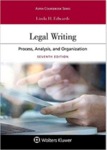
Legal Writing: Process, Analysis, and Organization
Linda H. Edwards
Legal Writing: Process, Analysis, and Organization, Seventh Edition by the 2017 Burton Award recipient and renowned author, Linda Edwards, is the only legal writing text that uses a process approach, presenting writing as a logical sequence of steps. Streamlined to meet the needs of today s students, the Seventh Edition uses adult learning theory concepts and a flipped classroom approach to add even greater focus and efficiency to classroom and study time.
Key Features:
- New Chapter (4) on working with statutes.
- Updated chapter on citation
- Improved coverage of brief-writing
- Streamlined chapter on letter writing to better meet the need of a first-year course.
- Modern process approach, with streamlined content for better absorption by students
- Clear and informal language
- Helpful appendices offering sample of office memos, sample letters, and appellate briefs.
-
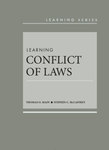
Learning Conflict of Laws
Thomas O. Main and Stephen C. McCaffrey
Learning Conflict of Laws is designed to teach aspiring litigators. Contemporary fact patterns bring doctrines to life. Hypotheticals and simulations prepare students for the practice of law. The book, written by experienced teachers, is organized into 23 chapters, with each chapter covering a specific topic. Chapters are structured so that they can be taught with or without court opinions, depending upon the amount of attention that the teacher wishes to allocate to the topic. Court opinions are used only to illustrate the application of a doctrine rather than to introduce or to teach that doctrine. The premise of the book is to provide students with the basic doctrine so that class time can be spent applying that doctrine to hypotheticals that surface the doctrine’s complexity.
-
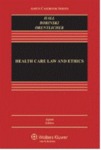
Health Care Law and Ethics
David Orentlicher
Health Care Law and Ethics, Ninth Edition offers a relationship-oriented approach to health law—covering the essentials, as well as topical and controversial subjects. The book provides thoughtful and teachable coverage of every aspect of health care law. Current and classic cases build logically from the fundamentals of the patient/provider relationship to the role of government and institutions in health care. The book is adaptable to both survey courses and courses covering portions of the field.
-
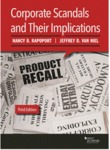
Corporate Scandals and Their Implications
Nancy B. Rapoport and Jeffrey D. Van Niel
Good students need to know more than the rules. Law students need to know more than substantive law, and business students need to know more than basic business principles. Students need to be able to understand how the clearest policies can be undercut by the ways in which humans tend to think, both individually and in groups. Most of the world's scandals weren't caused by villains; but rather by humans reacting to certain types of situations. In retrospect, it's possible to piece together what caused a scandal, but this book gives students the tools to try to forestall the development of a scandal in the first place. By deconstructing well-known scandals, students can put themselves in the role of CEO or General Counsel and determine how they would discover ways to react differently.
-
Learning Civil Procedure
Jeffrey W. Stempel, Steven Baicker-McKee, Brooke D. Coleman, David F. Herr, and Michael J. Kaufman
Learning Civil Procedure provides a broad, student-centered, user-friendly approach to civil procedure that is both clear and sophisticated. Students build mastery of the material through the presentation of examples and analyses. Students then move on to involved problems similar to what they will encounter on final examinations, bar examinations, and as lawyers. The book makes great use of problems to facilitate dialogue in class and correspondingly uses many fewer case excerpts than does the typical casebook. Students will emerge as competent and culturally literate lawyers because the book also includes the core "canon" of civil procedure opinions as well as sufficient historical background.
Learning Civil Procedure is a book designed by authors who both teach and litigate, making it the perfect tool for ensuring that students are ready for the classroom, the bar exam, and real-world litigation practice.
Editions of this book have been published in 2013, 2015, and 2018.
-
Fundamentals of Litigation Practice
Jeffrey W. Stempel, David F. Herr, and Roger S. Haydock
Fundamentals of Litigation Practice serves as an introduction to issues and tasks a litigator might face in routine litigation practice. This resource emphasizes the processes that take place before a trial. A unique feature is “StartSmart,” a brief synopsis at the beginning of each chapter. StartSmart is intended as a starting point for a new lawyer or for a more experienced lawyer who hasn't addressed the issue recently.
The text provides an overview of the law governing a particular problem and guides the process to obtaining further information. The balance of each chapter provides more detailed and comprehensive coverage of procedure, tactics, and techniques. You will find expanded discussions on:
- Investigation and litigation strategy
- Pleading
- Discovery
- Motion practice
- Trial
- Appeal
- Settlement
This resource helps you to easily and effectively solve common litigation problems. The table of contents sets out roughly the chronological life of a typical lawsuit.
Editions of this book have been published in 2010, 2011, 2012, 2013, 2014, 2015, 2016, 2017, and 2018.
-

General Liability Insurance Coverage: Key Issues in Every State
Jeffrey W. Stempel and Randy Maniloff
States can differ widely in their interpretation of liability insurance policies. Simply put, liability claims cannot be handled adequately without considering the applicable state law for each issue.
General Liability Insurance Coverage – Key Issues in Every State examines 20 of the most important coverage issues and provides the law – clearly and in detail – in all 50 states and D.C. And half of the chapters involve issues that are equally applicable to Professional Liability policies.
Previously published by Oxford University Press, the 4th Edition of Key Issues adds over 900 new cases (mostly from 2014-2017) and a new chapter addressing the ALI's Restatement of the Law of Liability Insurance.
If you want an esoteric discussion of coverage, do not buy Key Issues. Buy a treatise. But if you just want to have the law at your fingertips, on the liability coverage issues that arise every day, then you'll be pleased with what Key Issues has to offer.
Editions of this book have been published in 2011, 2012, 2015, and 2018.
-
The Doctrine-Skills Divide: Legal Education’s Self-Inflicted Wound
Linda H. Edwards
Calls to reform legal education argue for increasing skills courses and for adding skills components to existing doctrinal courses. Doctrinal teachers naturally resist. The argument asks them to give up curricular space and syllabus time in order to advance the teaching goals of someone else's course. But what if doctrinal and skills courses are not naturally occurring categories at all, but rather subjective groupings of our own creation? What if skills teaching is actually an inherent part of deep doctrinal learning? This book dismantles the theoretical legitimacy of the doctrine-skills divide, identifies its unnecessary negative entailments, and suggests better alternatives.
-
Copyright Law in a Nutshell
Mary LaFrance
This resource offers a compact yet comprehensive and up-to-date overview of U.S. copyright law in an uncluttered and readable format. Coverage ranges from the fundamental concepts of originality, authorship, and infringement to the highly technical rules governing digital phonorecord deliveries and digital public performance rights in sound recordings, the safe harbor provisions that limit the liability of Internet service providers, and the anti-circumvention and copyright management information provisions of the Digital Millennium Copyright Act. The evolving doctrines of fair use and contributory liability are also given thorough attention.
-
Disability Law: Cases, Materials, Problems (6th Edition)
Ann C. McGinley and Laura Rothstein
The Sixth Edition of Disability Law provides a comprehensive overview of the major laws relating to discrimination against individuals with disabilities. It takes a broad approach to understanding how disability discrimination laws apply to the kinds of cases attorneys, policymakers, and judges are likely to face, including cases on harassment and retaliation based on disability.
The book includes many of the selected cases, problems, questions, and statutory and regulatory references from the Fifth Edition, along coverage of recent developments that reflects recent regulatory and judicial decisions. New features include an introductory overview and chapter goals, definitions of key terms within each chapter, and chapter summaries. The Teacher’s Manual and web-related materials include additional hypotheticals, skills exercises, and enrichment materials.
-
Motion Practice
Jeffrey W. Stempel, David F. Herr, and Roger S. Haydock
This comprehensive guide analyzes every applicable rule of civil procedure, and gives practice-proven techniques for evaluating what motions will work most effectively in each case. From early pretrial motions dealing with complaints and jurisdiction to appellate motion practice for both victor and vanquished.
Editions of this book have been published in 1985, 1991, 1998, 2001, 2009, 2015, 2016, and 2017.
-
Legal Research: Examples and Explanations
Linda L. Berger, Terrill Pollman, and Jeanne Price
Examples & Explanations: Legal Research is designed to meet the needs of law students who have come to expect that they will instantly receive answers to their questions. Rather than cataloging sources or outlining processes, this text starts where today s law students are when they realize they have a research problem. By that time, their research problem is not locating sources, but knowing what to do with them.
The Legal Research E & E guides students through examples and explanations of the kinds of sources they ve found, using the context of interesting and entertaining real-world problems. The text helps students determine which sources are the most useful for the current project and which not; it leads students to understand how one source affects and relates to the others; and equally important it shows students how to write about the sources they have found.
Because this book covers the kinds of research projects faced not only by beginning law students but also by advanced students and even new lawyers, its value to its readers is long-lasting. Even experienced researchers will learn more about working with the difficult, as well as the easy, research questions that today are addressed by an array of sources.
-
Feminist Judgments: Rewritten Opinions of the United States Supreme Court
Linda L. Berger, Kathryn M. Stanchi, and Bridget J. Crawford
What would United States Supreme Court opinions look like if key decisions on gender issues were written with a feminist perspective? Feminist Judgments brings together a group of scholars and lawyers to rewrite, using feminist reasoning, the most significant US Supreme Court cases on gender from the 1800s to the present day. The twenty-five opinions in this volume demonstrate that judges with feminist viewpoints could have changed the course of the law. The rewritten decisions reveal that previously accepted judicial outcomes were not necessary or inevitable and demonstrate that feminist reasoning increases the judicial capacity for justice. Feminist Judgments opens a path for a long overdue discussion of the real impact of judicial diversity on the law as well as the influence of perspective on judging.
- Contains contributions from more than 50 feminist scholars and lawyers, so readers will learn about feminist reasoning from experienced writers and thinkers
- People interested in the Supreme Court, politics, feminism and women's studies will gain from varied and informed perspectives through a feminist lens
-
Practicing Bioethics Law
Leslie C. Griffin and Joan H. Krause
Practicing Bioethics Law provides basic readings in the field of bioethics law, including court cases, statutes, administrative regulations, briefs, and law review and other academic articles. The text presents theoretical debates about the latest bioethical subjects as well as practice-based materials that expose students to a wide range of possible bioethics-related careers. The book’s companion website provides practice documents, videos, pictures, scientific materials and other information that is too complex to include in a traditional casebook. The authors combined the book and the website so readers could learn more about the practice of bioethics law at the same time they are beginning to understand the theory and content of bioethics law.
-
Civil Procedure: Doctrine, Practice and Context
Thomas O. Main
Written by respected scholars and experienced educators, this book showcases rules and doctrine of civil procedure at work in actual practice of law. The procedural and nonprocedural aspects of the cases are thought-provoking, to hold students’ interest. Each chapter contains a well-written introduction, cases, and clear explanations of the doctrine, supported by comments and questions which deepen students’ understanding and clarify key concepts. This book also includes more than forty well-crafted problems the can be used in or out of class to to help students solidify their understanding of the materials. In-class exercises and simulations based on two sample case files are integrated throughout. Pleadings, memoranda, transcripts, exhibits, motions, and more – all taken from real cases – appear in the Appendix.
Features:
- All cases and notes have been updated so that the book is current through the early part of 2016
- Authors have added several practice exercises to the text that give students more experiential learning opportunities
- Two sample case files with transcripts, memoranda, exhibits, motions integrated throughout book
- Emphasis on lawyering skills and values and social responsibility
- Distinguished authorship by experienced educator-scholars
- Revised Teacher’s Manual, along with a new online community for adopters to allow for the sharing of teaching notes and other content among adopters.
-
Masculinity at Work: Employment Discrimination Through a Different Lens
Ann C. McGinley
In late October 2013, the Miami Dolphins’ player Jonathan Martin walked out on his team and checked into a mental health institution. The original story implied that Martin could not take the professional pressure. Within days, the story changed. News sources reported that Martin’s teammates had repeatedly bullied him and as a result, the twenty-four year-old African American player suffered serious depression. The response was skeptical, and many opined the harassment involved was simply locker room banter that all players endure; essentially, that boys will be boys.
Masculinity at Work uses the Jonathan Martin case and others to analyze Title VII of the Civil Rights Act of 1964 through the lens of masculinities theory. Illustrating how harassment and discrimination can occur because of sex even if the gendered nature of the behavior remains unseen to onlookers, this book educates readers about the invisibility of masculine structures and practices, how society constructs concepts of masculinity, and how men (and sometimes women) perform masculinity in different ways depending on their identities and situational contexts. Using a sophisticated mix of legal, gender, and social science analysis, the author demonstrates how masculinities theory can also offer significant insights into the behaviors and motivations of employers, as well as workplace structures that disadvantage both men and women who do not conform to gender stereotypes. Both a theoretical disposition and a practical guide for legal counsel and judges on the interpretation of sex and race discrimination cases, Masculinity at Work explains how this theory can be used to interpret Title VII in new, liberating ways.
-
Remedies, Cases and Problems
Elaine W. Shoben, William Murray Tabb, Rachel M. Janutis, and Thomas O. Main
The Sixth Edition offers a rich blend of materials mixing textual coverage, problems and provocative cases designed to promote lively class discussion in Remedies. The authors have revised a great book that preserves the best of the former editions and adds revisions and updates, especially in the areas of Equitable Defenses, Preliminary Injunctions, Adjustments and Limitations on Damages, Damages for Economic Loss, Jury Trials, and Declaratory Judgments.
This law school casebook focuses on the fundamental tools of judicial remedies—injunctions, damages, and restitution. In addition to providing students with a solid grounding in these basics, the casebook also offers the professor choices about which additional areas to cover in depth. Those choices for instruction beyond the basic topics include:- Specific Performance
- Equitable Defenses
- Contempt
- Preliminary and Permanent Injunctions
- Structural Injunctions
- Common law damages and Tort Reform
- Adjustments and Limitations on Damages
- Enjoining Speech/Litigation/Crimes/Nuisances
- Consequences of Remedial Characterizations
-
Fundamentals of Pretrial Litigation
Jeffrey W. Stempel, David F. Herr, and Roger S. Haydock
This trailblazing work, now in its Tenth Edition, continues to be the standard of pretrial texts, covering litigation practice and underlying theories. It is widely adopted in skills and clinic courses, advanced civil procedure seminars, civil procedure classes, as well as in pretrial litigation classes.
The chapters comprehensively explain case planning, investigation, pleadings, discovery, ediscovery, depositions, interrogatories, document and ESI production, admission requests, sanctions, procedural and dispositive motions, effective motion advocacy, and alternative dispute resolution and settlement methods. The materials enable students to become highly competent, responsible, and ethical litigators. This benchmark book covers the skills, theories, strategies, tactics, and techniques applicable to pretrial and prehearing practice before judges, arbitrators, and administrative officials. The extensive text provides examples and illustrations of successful litigation practice.
This Tenth Edition explains the 2015 amendments to the federal rules and describes new approaches to modern practice. This innovative book continues to include web-based electronic documents. Ediscovery case files appear on a website that students and the professor can readily access. This online location contains numerous documents and problems involving electronically stored information. Students are able to locate, search, and analyze documents to better prepare them for contemporary litigation experiences. No other law school text provides this extensive range of pretrial litigation and ediscovery problems.
Editions of this book have been published in 1985, 1992, 1994, 2000, 2001, 2007, 2008, 2011, 2013, and 2016.
-
Stempel and Knutsen on Insurance Coverage, Fourth Edition
Jeffrey W. Stempel and Erik S. Knutsen
Unlike most other books in the field, which slant toward either policyholder or insurer counsel, Stempel and Knutsen on Insurance Coverage takes an even-handed approach making it useful to attorneys from all sides. Moreover, it's designed for practitioners from all professional backgrounds and insurance experience.
Written in clear, jargon-free language, it covers everything from the basic insurance concepts, principles, and structure of insurance policies to today's most complex issues and disputes. The authors, Jeffrey W. Stempel and Erik S. Knutsen, are well-known authorities on the law of insurance coverage, and this new Fourth Edition of Stempel and Knutsen on Insurance Coverage is completely up-to-date on every aspect of its subject.
This one-stop resource provides both a sound historical, theoretical and doctrinal grounding in insurance, as well being practice-oriented and packed with practical guidance. After providing information about insurance policies and issues in general, it focuses on specific types of policies and coverage such as property coverage, liability coverage, automobile coverage, excess and umbrella coverage, and reinsurance, plus such vital areas as employment, defective construction, and terrorism claims...D&O liability...ERISA...bad faith litigation...and much more. Plus, you'll find extensive examination of the commercial general liability (CGL) policy, the type of insurance involved in most major coverage cases.
Among the most important CGL issues covered in Stempel and Knutsen on Insurance Coverage are:
- Pollution-related coverage
- Trigger of coverage
- Apportionment of insurer and policyholder responsibility
- Business risk exclusions
- Coverage under the "personal injury" section of the CGL
- Coverage under "advertising injury"
Nowhere else will you find so much valuable current information, in-depth analysis, sharp insight, authoritative commentary, significant case law, and practical guidance on this critically important area. With its clear explanations and thorough, even-handed coverage, Stempel and Knutsen on Insurance Coverage is unlike any other resource in its field.
Printing is not supported at the primary Gallery Thumbnail page. Please first navigate to a specific Image before printing.