

























































-

International Intellectual Property Law, Cases and Materials, 4th
Marketa Trimble
This casebook organizes contemporary foreign, as well as U.S., case law and literature to equip law students with the knowledge they need to engage in international intellectual property practice, in both transactional and litigation settings. Carefully selected materials also expose students to the social, economic, and cultural considerations that underpin intellectual property law around the world. Each field of law - copyright, patent, trademark, unfair competition, trade secrets, industrial design - is introduced by a comprehensive author's note placing the field in its international and comparative law context, and extensive notes on the cases and materials fill in relevant details, including currently and historically important topics. A substantially expanded teacher's guide offers step-by-step help to teaching every case and doctrine.
-
Entertainment Law on a Global Stage
Mary LaFrance
This book provides coverage of a variety of subjects not found in other entertainment law books, including analytical/transactional/experiential material on some of the unique problems that arise in representing an entertainer; entertainment industry contracts; taxation of entertainers; selling an idea; and the implications of the internet to entertainment and the identities of artists. It includes an international treatment of many of the subjects. In many of the chapters the questions are the kind that arise in law practice, and they ask students to apply what they are about to read or just have read.
-

Juvenile Justice in Global Perspective
David S. Tanenhaus, Franklin E. Zimring, and Maximo Langer
Among developed nations, the United States has one of the most extreme and harsh criminal justice systems in the world—there is overwhelmingly more violence, more punishment, and more incarceration for both adults and juveniles here. But while American scholars may have extensive knowledge about other justice systems around the world and how adults are treated, juvenile justice systems and the plight of youth who break the law throughout the world is less often studied. This important volume fills a large gap in the study of juvenile justice by providing an unprecedented comparison of criminal justice and juvenile justice systems across the world, looking for points of comparison and policy variance that can lead to positive change in the United States.
Edited by three distinguished scholars on this topic, Juvenile Justice in Global Perspective contains original contributions from some of the world’s leading voices. The contributors cover countries from Western Europe to rising powers like China, India, and countries in Latin America. The book discusses important issues such as the relationship between political change and juvenile justice, the common labels used to unify juvenile systems in different regions and in different forms of government, the types of juvenile systems that exist and how they differ, and the impact of national characteristic differences on outcomes of treatment. Furthermore, the book uses its data on criminal versus juvenile justice in a wide variety of nations to create a new explanation of why separate juvenile and criminal courts are felt to be necessary. Offering a unique, proactive and comprehensive approach to juvenile justice, Juvenile Justice in Global Perspective is an important resource for scholars, prosecutors, lawmakers, and judges who hope to shape a better future for youth involved with the criminal justice system.
-
A Practical Guide To Appellate Advocacy
Mary Beth Beazley
Mary Beth Beazley’s highly regarded A Practical Guide to Appellate Advocacy is a comprehensive student-focused guide to writing appellate briefs. Written in an understandable, direct writing style, this concise paperback’s effective structure centers on a four-point approach to writing and breaks each point down into key elements that are then treated in-depth.
• New material on the impact technology is having on appellate advocacy, the research for which includes interviews with both judges and clerks
• Tips on time management
• Material on the narrative theory has been expanded and clarified with syllogisms that use narrative theory
• New discussions on avoiding plagiarism in law school and malpractice in practice that also note the differences between academic misconduct and professional misconduct when it comes to legal writing
-
Regulating Land Based Casinos: Policies, Procedures, and Economics
Anthony N. Cabot and Ngai Pindell
Once restricted to exotic locations like Las Vegas, Macau, and Monte Carlo, casinos are now operating in many cities nationally and internationally from the Maryland waterfront to Ho Chi Minh City. This expansion of the gaming industry, both geographically and economically, raises new and important policy questions about the role of government in gaming regulation, the obligations and opportunities for casinos, and public support for gambling and gaming tax revenue. The contributors to this book have decades of experience in gaming regulation and business and are optimistic about the future of gaming and casinos. Each author critically engages the subject and offers his or her insight into what works and what does not in the gaming business and gaming regulation. Whether a jurisdiction is considering legalizing gaming or deciding how to regulate an existing gaming industry, it should engage in a careful cost-benefit analysis informed by available data and the jurisdiction’s particular public policy goals.
Each chapter in this book considers a key component of this process. The chapters collect and analyze gaming research from a wide variety of disciplines, including law, business, social sciences, economics, and tax to explain the many approaches a jurisdiction might take to identify and address important policy goals and to suggest emerging issues that require additional research and data. The chapters also incorporate extensive industry experience and examples to investigate the effects of different regulatory practices on the gaming industry, industry stakeholders, and the public.
-

Legal Writing: Process, Analysis, and Organization
Linda H. Edwards
This highly accessible text uses a process-based approach that integrates legal analysis with writing to provide a basic introduction to the skills needed for effective legal writing. Professor Linda Edwards, a highly respected member of the legal writing community, identifies four main stages of a writing task and helps students learn how to use each stage as a tool to better writing.
-

Choosing the Future for American Juvenile Justice
David S. Tanenhaus and Franklin E. Zimring
This is a hopeful but complicated era for those with ambitions to reform the juvenile courts and youth-serving public institutions in the United States. As advocates plea for major reforms, many fear the public backlash in making dramatic changes. Choosing the Future for American Juvenile Justice provides a look at the recent trends in juvenile justice as well as suggestions for reforms and policy changes in the future. Should youth be treated as adults when they break the law? How can youth be deterred from crime? What factors should be considered in how youth are punished? What role should the police have in schools?
This essential volume, edited by two of the leading scholars on juvenile justice, and with contributors who are among the key experts on each issue, the volume focuses on the most pressing issues of the day: the impact of neuroscience on our understanding of brain development and subsequent sentencing, the relationship of schools and the police, the issue of the school-to-prison pipeline, the impact of immigration, the privacy of juvenile records, and the need for national policies—including registration requirements--for juvenile sex offenders. Choosing the Future for American Juvenile Justice is not only a timely collection, based on the most current research, but also a forward-thinking volume that anticipates the needs for substantive and future changes in juvenile justice.
-
Bioethics and Public Health Law
David Orentlicher
Financial and ethical issues are integrated into this concise and engaging treatment of Bioethics and Public Health Law. The complex relationship between patients, providers, the state, and public health institutions are explored through high-interest cases, informative notes, and compelling problems. The updated Third Edition includes recent cases and developments in biotechnology, including stem cell research and gene patents, and updates to HIPPA coverage, DNA research, and bio-banks. Discussions of confidentiality and informed consent include new legislative and judicial responses to posthumous reproduction and the challenges arising from international reproductive tourism.
-
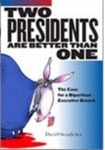
Two Presidents Are Better Than One: The Case for a Bipartisan Executive Branch
David Orentlicher
When talking heads and political pundits make their “What’s Wrong with America” lists, two concerns invariably rise to the top: the growing presidential abuse of power and the toxic political atmosphere in Washington. In Two Presidents Are Better Than One, David Orentlicher shows how the “imperial presidency” and partisan conflict are largely the result of a deeper problem—the Constitution’s placement of a single president atop the executive branch. Accordingly, writes Orentlicher, we can fix our broken political system by replacing the one person, one-party presidency with a two-person, two-party executive branch. Orentlicher contends that our founding fathers did not anticipate the extent to which their checks and balances would fail to contain executive power and partisan discord. They also did not foresee how the imperial presidency would aggravate partisan conflict. As the stakes in presidential elections have grown ever higher since the New Deal, battles to capture the White House have greatly exacerbated partisan differences. Had the framers been able to predict the future, Orentlicher argues, they would have been far less enamored with the idea of a single leader at the head of the executive branch and far more receptive to the alternative proposals for a plural executive that they rejected. Like their counterparts in Europe, they might well have created an executive branch in which power is shared among multiple persons from multiple political parties. Analyzing the histories of other countries with a plural executive branch and past examples of bipartisan cooperation within Congress, Orentlicher shows us why and how to implement a two-person, two-party presidency. Ultimately, Two Presidents Are Better Than One demonstrates why we need constitutional reform to rebalance power between the executive and legislative branches and contain partisan conflict in Washington.
-

Regulating Internet Gaming: Challenges and Opportunities
Ngai Pindell
Internet gaming sparks controversy from corporate board rooms to legislative hallways. Unlike traditional casinos, the Internet permits people to engage in gaming activities from virtually anywhere over computers and mobile devices. Governments and policy makers looking at this activity struggle with such questions as whether regulation can assure that Internet gaming can be restricted to adults, the games offered are fair and honest, and players will be paid if they win. This book is a timely collection of eleven chapters discussing key considerations and model approaches to internet gaming regulation and outlining the important questions and emerging answers to regulating gaming activity outside of land-based casinos.
Some of the regulatory insights are taken from lessons learned in the land-based casino industry and others from the relatively newer experiences of international internet gaming providers. Contributors are among the world’s leading experts on Internet gaming. They focus on structural concerns including record-keeping, managing different taxing regimes, maintaining effective controls, protecting customer funds, and preventing money laundering, as well as on policy concerns ensuring responsible play, the detection of fraud, reliable age verification, and the enforcement of gaming laws and norms across jurisdictions. Internet gaming is an emerging field, especially in the U.S., and the contributors to this book provide regulatory examples and lessons that will be helpful to lawyers, policy makers, gaming operators and others interested in this burgeoning industry.
-

Law Firm Job Survival Manual: From First Interview to Partnership
Nancy B. Rapoport and Jeffrey D. Van Niel
From interviewing for a position as an associate to achieving partnership, the Law Firm Job Survival Manual will help you run the gauntlet of your legal career faster and smarter. Written with humor and sensitivity, this concise handbook demystifies the etiquette and ethics of the law firm environment while equipping you with essential survival skills. Launch your career or jumpstart it with the observations and experience of Nancy B. Rapoport and Jeffrey D. Van Niel.
Featuring:
- Comprehensive advice that spans your career from summer job interviews through the first year of partnership
- First-person essays written by well respected practicing attorneys
- Face-saving tips on etiquette and ethics and avoiding career-limiting mistakes
- Practical information and guidance for day-to-day survival
- Companion website: http://lawfirmjobsurvivalmanual.blogspot.com
-
Commercial Contract Law: Transatlantic Perspectives
Keith A. Rowley
This book focuses on the law of commercial contracts as constructed by the U.S. and UK legal systems. Leading scholars from both sides of the Atlantic provide works of original scholarship focusing on current debates and trends from the two dominant common law systems. The chapters approach the subject areas from a variety of perspectives – doctrinal analysis, law and economic analysis, and social-legal studies, as well as other theoretical perspectives. The book covers the major themes that underlie the key debates relating to commercial contract law: role of consent; normative theories of contract law; contract design and good faith; implied terms and interpretation; policing contract behavior; misrepresentation, breach, and remedies; and the regional and international harmonization of contract law. Contributors provide insights on the many commonalities, but more interestingly, on the key divergences of the United States and United Kingdom's approaches to numerous areas of contract law. Such a comparative analysis provides a basis for future developments and improvements of commercial contract law in both countries, as well as other countries that are members of the common law systems. At the same time, insights gathered here should also be of interest to scholars and practitioners of the civil law tradition.
- Presents a comparative, multidisciplinary and scholarly assessment of the current state of commercial contract law in the US, the UK and to some extent in Europe
- Takes a wide range of theoretical approaches to study commercial contract
- Chapters approach the subject areas from a variety of perspectives - doctrinal analysis, law and economic analysis, and social-legal studies, as well as other theoretical perspectives
-
Readings in Persuasion: Briefs that Changed the World
Linda H. Edwards
An innovative and riveting look at briefs from a highly respected author that can be used a primary text in an advanced legal writing class or as a secondary text in a basic legal writing course. The chapters can be taken in any order. In the first part of the book, individual chapters cover advanced legal writing topics such as rhetoric, voice, emotion, metaphor, and narrative. The second part of the book introduces famous cases, with the story of each case. Chapter introductions provide interesting insights, such as historical context, the story of the case and of the litigation of it, information about the lawyers who wrote the briefs on both sides, what the courts decided, and, where relevant, about what has happened since. Compelling content makes it easy to engage students while photos throughout enliven the text. Full-text cases and briefs are available on a companion website and a Teacher’s Manual offers sample syllabi and suggested readings for each brief.
-
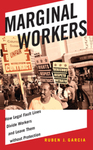
Marginal Workers: How Legal Fault Lines Divide Workers and Leave Them Without Protection
Ruben J. Garcia
Undocumented and authorized immigrant laborers, female workers, workers of color, guest workers, and unionized workers together compose an enormous and diverse part of the labor force in America. Labor and employment laws are supposed to protect employees from various workplace threats, such as poor wages, bad working conditions, and unfair dismissal. Yet as members of individual groups with minority status, the rights of many of these individuals are often dictated by other types of law, such as constitutional and immigration laws. Worse still, the groups who fall into these cracks in the legal system often do not have the political power necessary to change the laws for better protection.
In Marginal Workers, Ruben J. Garcia demonstrates that when it comes to these marginal workers, the sum of the law is less than its parts, and, despite what appears to be a plethora of applicable statutes, marginal workers are frequently lacking in protection. To ameliorate the status of marginal workers, he argues for a new paradigm in worker protection, one based on human freedom and rights, and points to a number of examples in which marginal workers have organized for greater justice on the job in spite of the weakness of the law.
-
Masculinities and the Law: A Multidimensional Approach
Ann C. McGinley and Frank Rudy Cooper
According to masculinities theory, masculinity is not a biological imperative but a social construction. Men engage in a constant struggle with other men to prove their masculinity. Masculinities and the Law develops a multidimensional approach. It sees categories of identity—including various forms of raced, classed, and sex-oriented masculinities—as operating simultaneously and creating different effects in different contexts.
By applying multidimensional masculinities theory to law, this cutting-edge collection both expands the field of masculinities and develops new thinking about important issues in feminist and critical race theories. The topics covered include how norms of masculinity influence the behavior of policemen, firefighters, and international soldiers on television and in the real world; employment discrimination against masculine cocktail waitresses and all transgendered employees; the legal treatment of fathers in the U.S. and the ways unauthorized migrant fathers use the dangers of border crossing to boost their masculine esteem; how Title IX fails to curtail the masculinity of sport; the racist assumptions behind the prison rape debate; the surprising roots of homophobia in Jamaican dancehall music; and the contradictions of the legal debate over women veiling in Turkey. Ultimately, the book argues that multidimensional masculinities theory can change how law is interpreted and applied.
-

Teacher's Manual to Remedies, Cases and Problems, 5th.
Elaine W. Shoben
This is the teacher's manual to Shoben, Tabb and Janutis' Remedies, Cases and Problems, 5th.
-

Principles of Insurance Law, Fourth Edition
Jeffrey W. Stempel, Peter Nash Swisher, and Erik S. Knutsen
Over the past two decades, there have been a number of important developments in the areas of liability, property, and life and health insurance that have significantly changed insurance law. Accordingly, the Fourth Edition of Principles of Insurance Law has been substantially rewritten, reformatted, and refocused in order to offer the insurance law student and practitioner a broad perspective of both traditional insurance law concepts and cutting-edge legal issues affecting contemporary insurance law theory and practice. This edition not only expands the scope of topical coverage, but also segments the law of insurance in a manner more amenable to study, as well as facilitating the recombination and reordering of the chapters as desired by individual instructors. The Fourth Edition of Principles of Insurance Law includes new and expanded treatment of important insurance law developments, including:
• The critical role of insurance binders as temporary forms of insurance as illustrated in the World Trade Center property insurance disputes resulting from the terrorist attacks of September 11, 2001;
• The continuing debate between "legal formalists" and "legal functionalists" for "the heart and soul" of insurance contract law;
• What constitutes a policyholder's "reasonable expectation" regarding coverage;
• The current property and liability insurance "crisis";
• Risk management and self-insurance issues;
• Emerging, and frequently conflicting, case law concerning the intersection of insurance law and federal anti-discrimination regulation;
• Ongoing interpretive battles over the preemptive scope of ERISA;
• The United States Supreme Court ruling that a California statute attempting to leverage European insurers into honoring commitments to Holocaust era policies is preempted by the Executive's power over foreign affairs;
• The State Farm v. Campbell decision, which struck down a $145 million punitive damages award in an insurance bad faith claim as well as setting more restrictive parameters for the recovery of punitive damages;
• New issues over the dividing line between "tangible" property typically covered under a property insurance policy and "intangible" property, which is typically excluded - an issue of increasing importance in the digital and cyber age;
• Refinement of liability insurance law regarding trigger of coverage, duty to defend, reimbursement of defense costs, and apportionment of insurer and policyholder responsibility for liability payments;
• The difficult-to-harmonize decisions concerning when a loss arises out of the "use" of an automobile;
• Insurer bad faith and the availability, if any, of actions against a policyholder for "reverse bad faith"; and
• The degree to which excess insurance and reinsurance may be subject to modified approaches to insurance policy construction. -

Global Patents: Limits of Transnational Enforcement
Marketa Trimble
In today’s globalized economy, many inventors, investors and businesses want their inventions to be protected in many, if not most, countries. However, there currently exists no single patent that will protect an invention globally, and despite the attempts in international treaties to simplify patenting, the process remains complicated, lengthy, and expensive. Furthermore, the necessity of enforcing patents in multiple countries exists without any possibility of concentrating in one location any parallel proceedings that concern the same invention and the same parties, thus making the maintenance of parallel patents infeasible.
Global Patents: Limits of Transnational Enforcement explains why the absence of a “global patent” persists, and discusses the events in the 140-year history of patent law internationalization that have shaped the solutions. The author analyzes the ways in which patent holders attempt to mitigate the problems that arise from the lack of global patent protection. One way is to concentrate enforcement in one court of patents granted in multiple countries, which makes the enforcement of the patents less costly and more consistent. Another way is to attempt to use the litigation of a single country patent to reach acts that occur outside the country, which can mitigate the lack of patent protection outside the country. However, both the concentration of proceedings and extraterritorial enforcement suffer from significant limitations. Global Patents explains these limitations and presents the solutions that have been proposed to address them. The book includes a thorough comparative analysis of the extraterritorial features of U.S. and German patent laws, and original statistics on U.S. patent litigation. Based on a comprehensive treatment of the various facets of transnational enforcement challenges, the author proposes the next stage of patent law internationalization.
-
Teacher's Manual to International Intellectual Property Law, Cases and Materials, 3d
Marketa Trimble
The Teacher's Manual for Goldstein and Trimble's International Intellectual Property Law, 3rd Edition (University Casebook Series®), explains the major concepts and policies behind each chapter of the book and, for each chapter, guides the instructor through the course materials, methodically reviewing each case and concept covered. The Manual offers suggestions for in-class discussion, additional practical examples, and links to useful websites. The Manual offers sample syllabi and final exams, and explains course goals and practical suggestions for course structure and course prerequisites.
-
Global Issues in Criminal Procedure
Christopher L. Blakesley
Here is an overview of constitutional issues that arise when searches, seizures, and interrogations occur outside the United States. Global Issues examines prosecutions in U.S. courts that involve evidence obtained abroad and the reach of the Fourth Amendment when the searches and seizures involve U.S. citizens abroad compared with non-U.S. citizens. Cases such as Verdugo-Urquidez and Alvarez-Machain are included, along with sections on electronic surveillance and the reach of the Fifth Amendment and Due Process Clause abroad, plus materials on torture and extraordinary renditions. There is also a short discussion of indefinite detention in places like Guantanamo Bay, Cuba, Afghanistan, and in other sites.
-

Legal Writing and Analysis
Linda H. Edwards
This concise text offers a straightforward guide to developing legal writing and analysis skills for beginning legal writers. Legal Writing and Analysis, Third Edition, leads students logically through reading and analyzing the law, writing the discussion of a legal question, writing an office memo and professional letters. The author then focuses on writing for advocacy and concludes with style and formalities and a chapter devoted to oral argument.
-
Transformations in American Legal History, II Law, Ideology, and Methods -- Essays in Honor of Morton J. Horwitz
Daniel W. Hamilton
Over the course of his career at Harvard, Morton Horwitz changed the questions legal historians ask. The Transformation of American Law, 1780–1860 (1977) disclosed the many ways that judge-made law favored commercial and property interests and remade law to promote economic growth. The Transformation of American Law, 1870–1960 (1992) continued that project, with a focus on ideas that reshaped law as we struggled for objective and neutral legal responses to our country’s crises. In more recent years he has written extensively on the legal realists and the Warren Court. Following an earlier festschrift volume by his former students, this volume includes essays by Horwitz’ colleagues at Harvard and those from across the academy, as well as his students. These essays assess specific themes in Horwitz’ work, from the antebellum era to the Warren Court, from jurisprudence to the influence of economics on judicial doctrine. The essays are, like Horwitz, provocative and original as they continue his transformation of American legal history.
-

Understanding Intellectual Property Law
Mary LaFrance
Understanding Intellectual Property Law, 2nd Edition covers all of the intellectual property areas and issues likely to be addressed in an intellectual property survey course. After a comprehensive Introduction in Chapter 1, the general areas covered in the remaining chapters include:
• Patents
• Trade Secrets
• Copyright
• Trademarks, and
• Other Intellectual Property Rights such as:
• Design Protection
• Plant Protection
• Semiconductor Chip Protection
• False Advertising
• Misappropriation
• Rights of Publicity
• Idea Submission
This new edition also includes:
• Coverage of major Supreme Court cases in intellectual property from the past decade
• Changes made in response to the Agreement on Trade Related Aspects of Intellectual Property Rights (TRIPS)
• Synthesis and reorganization of materials on patentable subject matter
• Developments in trade secret law, including adoption of the Uniform Trade Secrets Act (UTSA)
• Synthesis and reorganization of materials on copyrightable subject matter
• New material on secondary liability, including Grokster, Global-Tech, and the safe harbors and notice-and-takedown provisions for online service providers
• Coverage of the Digital Millennium Copyright Act, including anti-circumvention and copyright management information
• New materials on Internet technology, including streaming, search engines, keyword advertising, domain names, and cybersquatting
• Completely revised coverage of trademarks, including the Federal Trademark Dilution Act and the Trademark Dilution Revision Act
-
Gadamer and Ricoeur: Critical Horizons for Contemporary Hermeneutics
Francis J. Mootz III and George H. Taylor
Hans-Georg Gadamer and Paul Ricoeur were two of the most important hermeneutical philosophers of the twentieth century. Gadamer single-handedly revived hermeneutics as a philosophical field with his many essays and his masterpiece, Truth and Method. Ricoeur famously mediated the Gadamer-Habermas debate and advanced his own hermeneutical philosophy through a number of books addressing social theory, religion, psychoanalysis and political philosophy. This book brings Gadamer and Ricoeur into a hermeneutical conversation with each other through some of their most important commentators. Twelve leading scholars deliver contemporary assessments of the history and promise of hermeneutical philosophy, providing focused discussion on the work of these two key hermeneutical thinkers. The book shows how the horizons of their thought at once support and question each other and how, in many ways, the work of these two pioneering philosophers defines the issues and agendas for the new century.
-
Health Care Law and Ethics in a Nutshell
David Orentlicher
Public policy responses to escalating medical costs and constrained access pose fundamental challenges to health care law. Profound medical advances also generate many ethical dilemmas. This authoritative discussion considers how law and ethics respond to these driving social, economic, and political forces of innovation, crisis, and reform. Topics include health care finance and delivery structures, treatment relationships, facility and insurance regulation, corporate and tax law, refusal of life support, organ donation, and reproductive technologies.
Printing is not supported at the primary Gallery Thumbnail page. Please first navigate to a specific Image before printing.